


Commercial turf lasts longer than traditional grass because it is engineered with durable synthetic fibers and a reinforced base that withstand heavy foot traffic, harsh weather, and daily wear. Unlike natural grass, which is prone to soil compaction, disease, and bare patches, it maintains the appearance, performance, and structural integrity for 10–20 years with minimal maintenance.
The Engineering Behind Commercial Turf Longevity
The durability of synthetic turf is not accidental; it is a result of advanced materials science and precise manufacturing. Traditional grass relies on shallow root systems and cellular hydration to maintain structural posture. When compressed by heavy machinery, foot traffic, or vehicle tires, these plant cells rupture, resulting in bare patches of dirt and dead zones.
Synthetic systems are engineered to absorb impact and redistribute weight through a compacted aggregate base and reinforced backing that resists shifting, rutting, and tearing. This advanced construction is what makes commercial turf in Tampa, FL, a durable solution for high-traffic outdoor spaces.
Comparing Commercial Turf vs. Traditional Grass
To understand why synthetic options last longer, it helps to examine how both surfaces perform when subjected to identical, high-stress commercial environments.
| Performance Attribute | Commercial Synthetic Turf | Traditional Natural Grass |
| Average Lifespan | 15 to 20 Years | Variable (Requires constant reseeding) |
| Traffic Tolerance | High (Continuous heavy foot traffic) | Low (Compacts, thins, and creates mud) |
| Weather Resilience | Unaffected by drought, frost, or storms | Prone to dormant cycles, flooding, and heat death |
| Material Composition | Industrial Polyethylene / Polypropylene | Biological flora (Poa pratensis, St. Augustine, etc.) |
| Drainage Capacity | Up to 30+ inches of water per hour | Limited by soil saturation and compaction rates |
| Susceptibility to Pests | Zero (Inhospitable to insects and rodents) | High (Requires active pesticide treatments) |
Core Specifications and Material Features
Evaluating synthetic options requires a close look at the technical specifications that drive performance. High-quality systems built for commercial turf installation in Tampa, FL rely on strict manufacturing standards to deliver long-lasting durability and withstand daily operational demands.
Tuft Bind Strength
The force required (measured in pounds) to pull a synthetic grass blade out of its backing material. Commercial-grade systems typically feature a tuft-bind strength exceeding 8 pounds, ensuring resistance to heavy pulling, sports cleats, and intense scraping.
Face Weight
The weight of the synthetic turf fibers per square yard, excluding the backing material. Heavy-duty commercial applications leverage a higher face weight (often between 60 and 90 ounces per square yard) to provide a dense, resilient pile layer that recovers quickly from compression.
Permeability Rating
The rate at which water moves through the primary and secondary backing layers. Premium backing styles feature a matrix of perforated holes or a fully porous, non-perforated structure that channels massive volumes of fluid directly into the sub-base, completely eliminating surface pooling.
UV Stabilizers
Chemical compounds are integrated directly into the polymer masterbatch during extrusion. These stabilizers prevent the synthetic material from becoming brittle, cracking, or losing color vibrancy when exposed to continuous, long-term ultraviolet radiation from the sun.
Long-Term Cost Savings of Synthetic Turf
While synthetic turf requires a higher upfront investment, it significantly reduces long-term operating costs. Unlike natural grass, it eliminates recurring expenses for mowing, irrigation, fertilization, reseeding, and pest control.
Key cost-saving benefits include:
- Eliminates routine lawn maintenance and landscaping labor.
- Reduces water consumption and utility costs.
- Removes the need for fertilizers, herbicides, and pesticides.
- Minimizes repair costs caused by worn or damaged grass.
- Provides a predictable lifespan of 15–20 years with minimal upkeep.
For high-traffic properties, these savings often outweigh the initial investment, making commercial turf installation a cost-effective long-term solution.
Automotive Protection for High-Value Assets
Commercial synthetic turf also benefits automotive dealerships, detailing studios, and private vehicle collections by creating a clean, controlled environment that helps protect high-value vehicles while enhancing the property’s professional appearance. Unlike natural grass, it minimizes dirt, moisture, and debris that can affect both vehicles and customer-facing spaces.
Key benefits include:
- Eliminates mud, moisture, and debris that can damage paint, ceramic coatings, and undercarriages.
- Reduces the risk of fertilizer, chemical overspray, and hard-water spotting.
- Keeps display areas, service lanes, and detailing bays cleaner and more professional.
- Creates an attractive, low-maintenance landscape that enhances curb appeal year-round.
Debunking a Common Industry Myth: “Turf Melts and Falls Apart in the Sun”
A persistent misconception within the commercial property sector is that synthetic turf cannot handle prolonged exposure to direct sunlight, with critics claiming it will quickly melt, fade, or degrade under intense heat. While early generations of synthetic grass suffered from UV degradation, modern industrial manufacturing has completely eliminated this flaw.
Modern commercial turf is engineered with advanced inhibitors that protect the polymers at a molecular level. These surfaces are designed to withstand extreme thermal conditions without altering their structural form or fading.
While it is true that synthetic fibers can absorb ambient heat on exceptionally hot days, they do not degrade. Property owners can easily manage surface temperatures with high-performance infills, such as acrylic-coated silica sands or cooling composite layers, which regulate heat retention. When installed correctly by specialists, synthetic lawns maintain their strength and rich color through years of harsh summer sun.
Structural Benefits of Synthetic Turf Systems
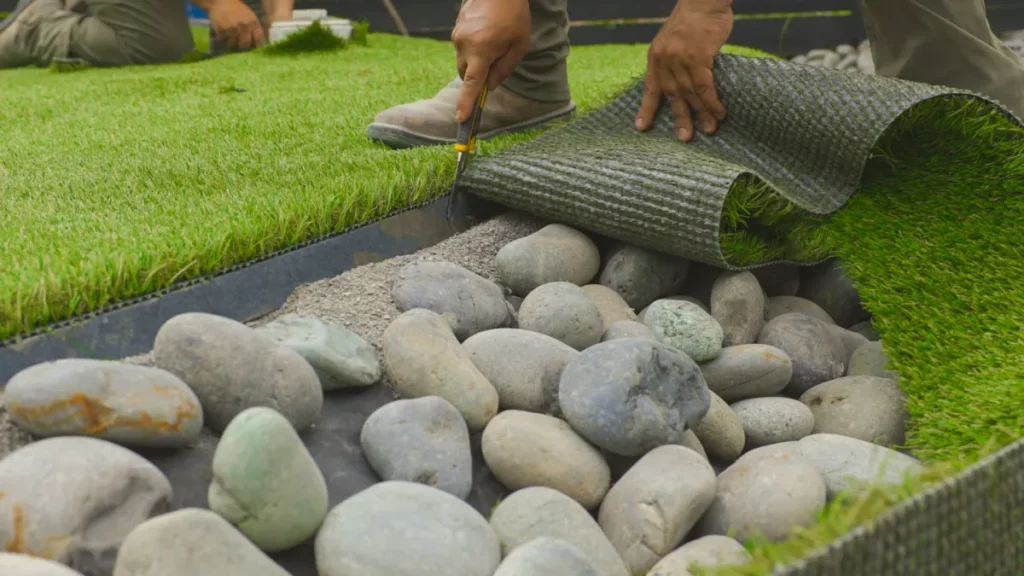
To maximize the functional life of an outdoor area, a professional commercial turf service follows a precise sequence of structural layers. Skipping any step or reducing materials can lead to premature failure, wrinkling, or poor drainage.
- Sub-Grade Excavation and Compaction
The natural topsoil is removed to a depth of 3 to 4 inches to clear out unstable organic matter, grass roots, and shifting dirt. The remaining native sub-base is then mechanically compacted to establish a solid foundation. - Geotextile Separation Layer
A heavy-duty geotextile fabric is laid over the compacted soil. This layer prevents the underlying dirt from mixing with the stone aggregate base while allowing water to pass through freely, blocking weed growth from beneath. - Class 2 Road Base/Crushed Stone Matrix
A layered base of crushed stone, decomposed granite, or fine gravel is spread and compacted. This layer acts as the primary weight-bearing foundation and structural drainage grid for the property. - Precision Turf Layout and Seaming
The synthetic turf rolls are carefully aligned, stretched, and secured with industrial-grade seaming tape and specialized outdoor adhesive, creating a unified surface resistant to shifting or lifting. - Infill Application and Power Brushing
A precise layer of rounded silica sand or ambient-cooling infill is evenly spread across the surface. This material settles between the blades to ballast the system down, protect the backing from UV rays, and keep the individual grass blades standing upright.
Real-World Performance Across Varied Commercial Spaces
Industrial installations deliver consistent results across a wide range of commercial environments, proving their value in diverse applications:
- Corporate Courtyards: Converting high-traffic courtyards to synthetic turf eliminates routine landscape maintenance while providing a clean, usable space year-round.
- Retail Walkways: Synthetic turf prevents mud and dirt from being tracked into entrances, even during heavy rain, keeping outdoor spaces cleaner and more attractive.
- Mixed-Use Developments: Premium synthetic turf creates durable, pet-friendly green spaces that stay clean, odor-resistant, and attractive with minimal maintenance.
Secure Your Property’s Visual and Structural Value
Investing in a high-grade synthetic lawn is a smart financial move that keeps your commercial property looking sharp, professional, and immaculate for years to come. By choosing a surface built to withstand heavy wear and tear, you eliminate ongoing landscaping headaches, protect your valuable assets, and reduce operational overhead.
At Beacon Turf, we combine field-tested expertise with premium materials to deliver durable, long-lasting results. Ready to upgrade your commercial property with a low-maintenance synthetic turf solution?
Contact us today to speak with an expert and schedule your property consultation.
People Also Ask
How long does commercial turf last under constant foot traffic?
High-quality commercial turf typically lasts between 15 and 20 years. Its long-term durability depends heavily on the face weight of the fibers, the density of the tufting, and the structural integrity of the sub-base installation.
Does synthetic turf require any maintenance at all?
While it eliminates mowing, watering, chemical applications, and fertilizing, commercial turf does require minimal upkeep to maximize its lifespan. Periodic brushing to prevent fiber matting, removing organic debris, and occasional rinsing to wash away dust or pet waste will help preserve its appearance.
How does synthetic turf handle heavy rain and flooding?
Premium commercial turf features a highly porous backing that drains water rapidly, often at a rate exceeding 30 inches per hour. This rapid drainage capability prevents surface pooling, runoff, and muddy conditions, allowing the area to be used immediately after a heavy storm.