



Installing artificial turf around trees and garden beds usually increases labor costs because it requires extra measuring, precise cutting, edge finishing, and careful site preparation. Complex landscaping can also affect drainage and base installation. The final cost depends on the number of obstacles, their shapes, accessibility, and whether existing tree roots need protection.
Why Installing Artificial Turf Around Landscaping Features Costs More
Installing artificial turf across a large, open lawn is generally more straightforward than working around established trees, curved flower beds, decorative borders, and other permanent landscaping features.
An open area allows installers to lay larger sections of synthetic grass with fewer cuts and simpler positioning. Irregular layouts require more detailed planning and additional finishing work.
For homeowners considering artificial turf installation in Clearwater, FL, these differences can significantly influence the time required to complete a project.
The most common labor-intensive tasks include:
- Measuring irregular boundaries and obstacles.
- Cutting turf around tree trunks and planting beds.
- Preparing smaller sections of the aggregate base.
- Installing secure borders around curved edges.
- Planning drainage without damaging existing landscaping.
- Managing additional material waste from detailed cuts.
At Beacon Turf, residential turf projects begin with property evaluation, layout planning, grading, and foundation preparation. These steps help determine how the finished surface will fit the surrounding landscape.
A professional estimate should account for these conditions before installation begins.
What Factors Increase Labor Costs Around Trees And Garden Beds
Not every landscaped yard requires the same installation effort. Several physical characteristics determine whether additional labor is necessary.
1. Number and Size of Trees
Trees create permanent obstacles that installers must work around.
A yard with one centrally located tree generally requires less detailed cutting than a property containing several trees spread across the proposed turf area.
Larger trees may also have exposed surface roots or root flares that limit excavation and base preparation.
For example, a homeowner in Countryside with an established shade tree may need a design that preserves an appropriate planting area around the trunk rather than extending synthetic grass directly against it.
The installer must evaluate whether turf is suitable near the tree’s root system before determining the installation boundaries.
2. Shape and Number of Garden Beds
Straight rectangular garden beds usually require fewer measurements and simpler edge cuts than irregular planting areas.
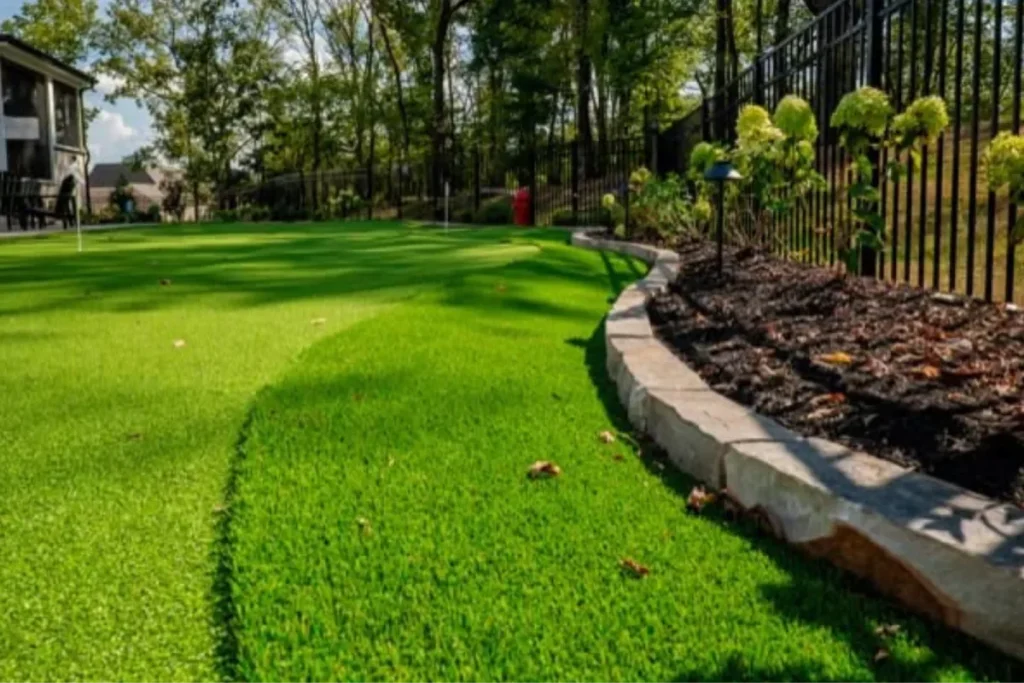
Curved flower beds, decorative stone borders, and narrow landscape islands require greater installation precision.
Each additional corner or curve creates another area where the turf must be fitted carefully.
Homeowners comparing artificial turf installation in Clearwater should consider the complexity of their existing landscape rather than evaluating the project solely by lawn size.
3. Existing Soil and Root Conditions
Artificial turf requires a stable foundation, but established root systems complicate excavation.
Tree roots can extend well beyond the visible trunk and may be concentrated close to the soil surface.
Aggressive digging, soil compaction, or covering important root zones can damage tree health.
A qualified installer should identify these limitations and recommend suitable setbacks or alternative landscaping materials when necessary.
4. Accessibility and Working Space
Restricted access can increase the time required to move materials, equipment, and debris.
Narrow side yards, fenced gardens, raised planting beds, and closely spaced structures may require additional manual labor.
The contractor may need to adjust material handling and installation methods to avoid damaging surrounding plants or structures.
Artificial Turf Labor Costs: Open Lawns vs. Landscaped Areas
The following comparison explains why installation complexity can affect labor requirements.
| Installation Factor | Open Lawn | Yard With Trees and Beds |
| Measuring | Simple perimeter measurements | Multiple irregular boundaries |
| Turf cutting | Fewer straight cuts | Detailed curves and openings |
| Ground preparation | More uniform excavation | Careful work near landscaping |
| Base installation | Easier equipment access | Restricted sections and obstacles |
| Edging | Mostly continuous borders | Additional internal borders |
| Material waste | Often lower | Potentially higher |
| Labor requirements | Generally lower | Often higher |
These are general comparisons rather than fixed pricing rules.
How Trees Affect Artificial Turf Installation
Trees require special consideration because their roots need oxygen, moisture, and suitable soil conditions to remain healthy.
Artificial turf systems commonly involve excavation, aggregate base materials, compaction, and securing the finished surface.
These procedures may be unsuitable within portions of an established tree’s root zone.
An appropriate site assessment considers:
Root flare: The widened area where the trunk transitions into major roots. This area should remain exposed and should not be buried beneath a new base.
Root protection zone: The area surrounding a tree where digging, compaction, and soil disturbance may damage roots.
Surface roots: Visible roots that can interfere with excavation, grading, and installation.
Drainage patterns: How water moves through the landscape, which should continue supporting nearby plants.
Tree growth: Trunks and roots change over time, so fixed borders positioned too closely can create future problems.
In some situations, maintaining a natural mulch bed around a tree is preferable to installing synthetic turf close to its trunk.
A certified arborist can help evaluate sensitive trees before substantial root-zone disturbance.
Common Myth: Trees And Garden Beds Always Make Turf Installation Expensive
A common misconception is that any tree or flower bed automatically makes artificial turf installation substantially more expensive.
In reality, labor depends on the project’s overall complexity.
A single garden bed with straight borders may add relatively little work, while several irregularly shaped planting areas can require extensive cutting and finishing.
Likewise, one mature tree may require a significant design adjustment if important surface roots extend into the proposed installation area.
The number of obstacles alone does not determine the price.
Property owners comparing Clearwater FL artificial turf installation estimates should ask how contractors calculate additional labor.
A transparent quotation should explain whether the price includes special edging, base modifications, drainage adjustments, or removal of existing materials.
It is also misleading to assume artificial turf eliminates every maintenance responsibility. Leaves, soil, and organic debris from nearby landscaping still require periodic removal.
How to Reduce Labor Costs Without Sacrificing Quality
Reducing installation expenses does not necessarily require removing established landscaping.
Often, the most effective strategy is simplifying the turf layout while retaining important trees and plants.
For example, a homeowner in Skycrest might choose a wider, clearly defined planting bed around a mature tree instead of requesting a tight circular turf cut around the trunk.
This approach may simplify the finished border while avoiding potentially harmful work near major roots.
Consider these practical options:
- Simplify bed outlines: Gentle curves and straight borders can require less cutting than complicated shapes.
- Preserve planting areas: Keep suitable natural surfaces around trees and established shrubs.
- Limit unnecessary transitions: Reduce the number of narrow turf strips between separate garden beds.
- Plan drainage early: Address potential water flow issues before foundation installation.
- Discuss access: Identify gates, pathways, and obstructions before receiving a quote.
- Request an itemized estimate: Clarify which site conditions contribute to labor charges.
The goal is to balance appearance, tree health, material efficiency, and installation quality.
Plan Your Artificial Turf Installation With Beacon Turf
Installing synthetic grass around trees and garden beds can increase labor costs, but proper planning helps keep the project efficient while protecting existing landscaping.
Beacon Turf provides residential artificial turf installation with a focus on properly prepared aggregate foundations, drainage planning, and custom property layouts.
The company also offers synthetic turf solutions for putting greens, pet areas, playgrounds, and commercial spaces, helping property owners choose options suited to different outdoor uses.
Ready to transform your yard without compromising its existing landscape?
Contact us to schedule a consultation and request a customized installation estimate. Discuss your trees, garden beds, and yard layout with the team to identify a practical approach that balances appearance, durability, and installation costs.
People Also Ask
Does Artificial Turf Cost More to Install Around Trees?
Usually, yes. Trees often require additional measuring, cutting, and edge finishing. Root protection may also require layout changes or additional preparation. The additional cost depends on the tree’s size, location, and surrounding soil conditions.
Can Artificial Turf Be Installed Directly Against a Tree Trunk?
Installing turf directly against a tree trunk is generally not advisable. Tree roots require water and oxygen, and installation work can disturb sensitive root zones. Maintaining an appropriate natural planting or mulch area may be a better choice.
Do Curved Garden Beds Make Turf Installation Harder?
Curved garden beds can make installation harder because they require precise measurements, extra cuts, and carefully secured borders. Simple curves are usually less labor-intensive than multiple narrow or irregularly shaped planting areas.
How Can Homeowners Get an Accurate Artificial Turf Installation Estimate?
Request an on-site evaluation that includes measurements, existing landscaping, soil conditions, drainage, accessibility, material requirements, and edge finishing. A detailed written quote makes labor charges easier to understand and proposals easier to compare.